


.svg)

The World War II Essay - South-East Asian Theatre (part 2)
n the morning of December 7th, 1941, 353 Japanese planes launched a devastating attack on Pearl Harbor, the American naval base in Hawaii. The assault claimed the lives of 2403 Americans, and it resulted in the destruction or damage of 19 ships and 188 aircraft. Despite catching the American public by complete surprise, the assault on Pearl Harbor was anything but a random strike on an unsuspecting enemy. This operation had been meticulously planned for months, with its underlying causes tracing back over several years.
The Road to War
Following the Great War, Japan emerged as a victorious nation, committing to respecting Chinese territorial sovereignty and limiting its naval capacity as per the Washington Naval Conference agreements in 1921. However, discontent brewed among Japanese naval officers who resented the imposed restrictions. In the West, prevalent prejudices against Asian nations as mere targets for colonization fueled Japanese resentment, as they found themselves amidst the world's industrial powers.
Japan, despite being a small island nation, began to perceive Western arrogance and interference. A population boom, coupled with the impact of the Great Depression, led to increased nationalist sentiments. Japanese military leaders started believing that Japan's future hinged on outward expansion—a conquest to secure new lands, oil, raw materials, and grain.
In 1931, Japan orchestrated a railway incident in Manchuria, claiming Chinese destruction of Japanese railway tracks. Exploiting this pretext, Japan seized the entire province and established Manchukuo—a puppet state under Imperial Japan's control. International condemnation, particularly from the League of Nations, ensued, prompting Japan to withdraw from the ineffective League.
Undeterred, Japan expanded further into China, seizing Shanghai and Nanking by the end of 1937. The infamous Rape of Nanking unfolded, marked by widespread destruction, slaughter, rape, and murder. The brutality incurred international outrage, with the United States providing China a $25 million loan to resist Japanese invasion.
By July 1940, a new leadership led by Hideki Tojo emerged in Japan, focusing on military expansion as its primary goal. The conquest of Asia and the Pacific became the central agenda. With the Western Allies weakened by German blitzkrieg, Japan turned its attention southward—towards French Indochina, the Dutch East Indies, and British Malaya. This move aimed to secure vital raw materials such as oil and rubber but risked provoking conflict with the West, particularly the United States, which had bases in the Philippines.
Roosevelt and the Rising Sun
President Franklin Roosevelt, observing the rise of fascist powers globally, felt a sense of unease and a desire to act. However, the American people, deeply influenced by isolationist sentiments after their involvement in the Great War, were reluctant to engage in another conflict, seemingly unaffected by the distant turmoil. Despite British Prime Minister Winston Churchill's appeals for assistance, most Americans were hesitant to intervene.
Roosevelt, however, held a distinct perspective. He foresaw the dire consequences for the United States if Britain and France succumbed to a German invasion, potentially extinguishing Western democracy in Europe. While avoiding direct military intervention, Roosevelt committed to supporting the Allies with aid. American ships laden with crucial supplies sailed into British ports, contributing significantly to the war effort in Europe.
Simultaneously, Roosevelt implemented a strategic shift in the Pacific, relocating America's Pacific fleet to Pearl Harbor, a naval base in Hawaii. This move aimed to deter Japanese aggression by placing American power in closer proximity to Japan. Despite this deterrent, Japan proceeded to invade French Indochina, prompting Roosevelt to respond with economic sanctions. An embargo on vital naval and aviation supplies, including oil, iron ore, steel, and rubber, was imposed on Japan. Great Britain and the Netherlands joined in, severing Japan from 90 percent of its oil supply.
Facing this resource crisis, Japan confronted three options: concede and exist under Western influence, negotiate a deal, or pursue a new source of oil through conquest. Initiating negotiations, Japan offered to withdraw from Indochina and parts of China, contingent on the United States resuming trade relations and supporting Japan's acquisition of the Dutch East Indies. The Roosevelt administration rejected these proposals, demanding Japan's outright withdrawal from China. In response, Japan, furious at the rejection, set sail for an American naval base in Hawaii—Pearl Harbor.
Italy's New Empire
Mussolini ascended to power in 1922 with a vision to revive Italy's greatness, aspiring to establish a new Roman Empire. However, lacking the economic and military strength to realize this ambition initially, Mussolini aligned with Britain and France in 1935, opposing German rearmament. Paradoxically, in the same year, Italy invaded Abyssinia (modern-day Ethiopia), triggering international appeals for help and leading to symbolic economic sanctions by Britain and France.
By 1940, as France succumbed to German blitzkrieg, Mussolini seized the opportunity to forge an alliance with Hitler and the Nazis. With this new partnership, Mussolini's imperial dreams came closer to fruition, positioning him to capture territories in the Mediterranean and North Africa previously held by the British and the French. Mussolini's gaze now fixed upon Egypt, a strategic region controlled by Britain.
However, Churchill, a staunch imperialist, recognized the vital importance of maintaining control over the Mediterranean, as Britain held key points like the Suez Canal and the Straits of Gibraltar. These waterways connected the Mediterranean to the Indian and Atlantic Oceans, making the British colony of Egypt, with the Suez Canal, a linchpin for the British Empire. The canal facilitated essential supplies for Britain's war effort, including oil and food.
Mussolini aimed to capture Egypt, threatening British naval bases and the Suez Canal. He was optimistic about success, considering the odds seemingly in Italy's favor. In June 1939, the British Mediterranean Fleet had only 45 combat ships against Italy's 183. The Italians also held a submarine advantage, boasting 108 against Britain's 12. Following France's surrender in June 1940, the responsibility for controlling the Mediterranean rested solely on the Royal Navy, while on land, Italy's troop numbers in Libya outnumbered the British forces defending Egypt, Sudan, and Palestine. The stage was set for a critical chapter in the struggle for supremacy in the Mediterranean.
Operation Compass
On the 11th of June 1940, Benito Mussolini declared war on Britain and France, and on September 13th, the Italian Tenth Army invaded Egypt from their colony, Libya. The Italians moved swiftly, capturing the coastal town of Sidi Barrani. Archibald Wavell, Commander-in-Chief of the Middle East, initiated a counter-attack plan, code-named Operation Compass. Wavell directed the Western Desert Force, consisting of 36,000 men from Britain, India, Australia, and New Zealand. Instead of attacking where the Italians expected, in December 1940, the Western Desert Force swung south, traversing the open desert to surprise the Italian forces from behind.
Wavell's plan succeeded, with Italian defenses being overrun in a matter of days in the Battle of Sidi Barrani. The British captured 40,000 Italian soldiers, forcing the remaining troops to flee west. Italy's aspirations of empire looked increasingly unlikely, and losses mounted as the British pursued the fleeing troops 500 miles across Libya, capturing Bardia, Tobruk, Derna, and Benghazi. Wavell's offensive concluded at El Agheila on the 7th of February 1941. The Italians had nowhere else to run. In just two months, the British had destroyed 10 Italian divisions and captured more than 130,000 prisoners.
Confident that North Africa was now under British control, Churchill redirected a significant portion of the region's forces to fight in Greece.
Greece
In April 1939, Mussolini took the first steps towards creating his new empire by occupying Albania to the east. Over a year later, in October 1940, Mussolini marched south into Greece after they refused to become an Italian colony. Despite Italy's superior numbers, almost double that of the Greeks, they failed to take the country and were pushed out of Greece and much of Albania too.
Seeing this as an opportunity to bolster Axis control in the area, Churchill was quick to send aid, diverting British soldiers from North Africa to help the Greeks defend their country and push back Italy. Unfortunately for the Allies, this drew the attention of Hitler, who would not allow his southern flank to become exposed. In April 1941, Hitler sent half a million German soldiers southward, quickly overcoming the combined British and Greek forces. Within a month, Athens had fallen, forcing a mass retreat of over 30,000 Allied soldiers to the Greek island of Crete.
Germany then attacked Crete, where British and Greek troops had taken up positions. Hitler ordered an assault on the island, deploying over twenty thousand soldiers who landed via parachute. The invasion was effective, and the island was taken within two weeks. While fifteen thousand Allied soldiers were evacuated, some eighteen thousand were taken prisoner, with the Royal Navy sustaining additional losses during the evacuation.
Although the mission was a success for Hitler, he had sustained such heavy losses during the invasion, with men being shot down in the sky, that Germany's parachute regiment would not be used again in a major battle for the remainder of the war. While this was a major victory for the Axis powers, it was the first of several times that Mussolini's failures would require Hitler to divert his soldiers to the Mediterranean. This would, in time, prove to be disastrous for the Fuhrer as his forces became stretched thin.
Japan's Path of Conquest
Having chosen the path of conquest, Japan now looked to the Dutch East Indies and other countries in the Pacific Theatre. These countries would provide them with oil and rubber. For this plan to work, the Japanese believed that American influence in the region would have to be removed. In other words, Japan's leaders decided that military expansion in Southeast Asia would require an attack on the United States. As the US had recently positioned their entire Pacific fleet within striking distance of Japanese forces, Pearl Harbor would become Japan's main target.
The attack on Pearl Harbor was masterminded by Admiral Isoroku Yamamoto, a gifted naval officer. Yamamoto was reluctant to go to war with the United States, but when war became inevitable, he knew that the only way for Japan to win was to knock out America's Pacific fleet before the fighting began. If they couldn't do so, Yamamoto thought that Japan would eventually lose in a prolonged conflict with the United States. Yamamoto believed the attack on Pearl Harbor would give Japan around six months to seize the Dutch East Indies and secure control of Southeast Asia and the Western Pacific without American interference. During this time, Japan could also begin construction of new battleships and aircraft carriers, increasing its presence and naval might in the region.
Lastly, Yamamoto's plan assumed that the United States would negotiate peace terms following the loss of its fleet, seeking compromise and accepting Japanese dominance in East Asia. Yamamoto also believed that it was vital to destroy America's aircraft carriers in the attack, as he saw them as the true heart of a modern navy, as opposed to battleships. Unknown to Yamamoto, U.S. code breakers had managed to crack the Japanese diplomatic code and knew an attack was imminent, but they didn't know where. With American territory under threat, most of the command at Pearl Harbor thought the Philippines was the most likely target.
When the U.S. command at Pearl Harbor was warned that Japan was on the offensive, all they could do was prepare to mobilize against a threat they thought would strike somewhere in the Pacific, never imagining that they would be the actual target. As a result, Walter Schwart, the army commander in Hawaii, believed that the most serious threat Pearl Harbor faced was sabotage from the 160,000 Hawaiian residents of Japanese ancestry. The island's planes were then clustered together on the runways so that they could be closely guarded, and military supplies, such as anti-aircraft rounds, were locked away to prevent sabotage. To reinforce the security of American outposts, two of the three aircraft carriers were sent from Pearl Harbor to Wake and Midway Island, with the third aircraft carrier undergoing maintenance back on the west coast of the United States.
Pearl Harbour
The Japanese forces attacked Pearl Harbor on the morning of December 7th, 1941. The attackers achieved complete surprise, with almost every American who looked up to the sky and saw the Japanese planes assuming they were friendly aircraft engaged in training exercises. But then the first bombs exploded, torpedoes specially designed for shallow waters struck into the side of battleships, while armor-piercing bombs rained down from above, cutting through their decks.
Within minutes, the battleships Maryland and Tennessee were each hit, followed by the Arizona, which sank almost instantly. The first Japanese wave consisted of 183 planes, with torpedo bombers attacking the ships and dive bombers simultaneously attacking their airfields, preventing airborne resistance. Unfortunately for the Americans, their anti-sabotage operation had left their planes clustered together, making them ideal targets for Japanese bombs. To make matters worse, they couldn't even shoot back, as their anti-aircraft ammunition had been locked away.
Ninety minutes later, the attack was over. The Japanese had sunk or damaged 19 ships and destroyed 188 planes, while damaging 159 others. The attack had killed over 2,000 U.S servicemen, with nearly half of them on the U.S battleship Arizona. It appeared to be a total victory for Japan, which had lost only 29 aircraft during the assault. Believing sufficient damage had been done, Admiral Nagumo, who had commanded the operation, called off a third attack. However, although Japanese losses were minuscule, victory was not complete.
Three American aircraft carriers were not at Pearl Harbor, and seven heavy cruisers were still out at sea. The attack had also failed to hit American fuel depots and had not destroyed the U.S submarine base. The next day, President Franklin Roosevelt declared war on the Japanese Empire, and three days later, Germany and Italy declared war on the United States. Pearl Harbor would rally the American people, who were once isolationist, into fierce defenders of liberty, with Americans from all over the United States flocking to recruitment stations. Far from wiping out American influence in the Pacific, the Japanese had just awoken a sleeping giant. What had started as a mainly European war had now escalated into a global conflict.
Japanese Blitzkrieg
In the wake of victory at Pearl Harbor and thinking that the American fleet had been neutralized, Japan embarked on a devastating path of conquest across Southeast Asia and the Pacific. Within a month, Japan had attacked Thailand, British Hong Kong, Malaya, Burma, and Borneo, as well as the American Philippines, Guam, and Wake Island. A month later, Japan invaded the Dutch East Indies, New Guinea, and the Solomon Islands, and a month after that, they invaded Singapore, the crown jewel of British imperial rule in the East.
The British had fortified Singapore with coastal defense guns pointing out towards the sea, but Japan was invading from the north by land and by air, with 30,000 Japanese soldiers attacking on foot through Malaya. The British seemed to be in a good position, as they sported 85,000 soldiers in the region, comprising both British, Australian, and Indian troops. However, the British were outmatched in air power by a factor of two to one, with the Japanese also having both newer and more advanced tanks and aircraft.
With Britain and the rest of Europe focusing on Germany in the west, little to no modern weaponry was prioritized for the east. With only 30,000 troops, less than a third of British forces, the Japanese quickly broke through the British defensive lines in the north, forcing a retreat back to Singapore itself. In response, Britain sent two battleships in support, HMS Prince of Wales and HMS Repulse, but they were sent without the aid of an aircraft carrier, making the ships vulnerable from the sky. As a result, they were quickly destroyed by Japanese dive bombers, giving Japan naval superiority in Southeast Asia. As Churchill noted at the time,
"Over all this vast expanse of waters, Japan was supreme, and we everywhere were weak and naked."
Japan then pushed into Singapore, and after a devastating series of bombing raids by Japanese aircraft, the British garrison was left completely overwhelmed. After a week of fighting, military supplies and rations were running low, with petrol for military vehicles and ammunition for the field artillery and anti-aircraft guns almost completely gone. As a result, the commanding officer, Lieutenant General Arthur Percival, initiated the largest surrender in British military history, with 80,000 troops laying down their arms. Allied soldiers were then taken to Japanese prisoner of war camps, being used as slave labor. More than half of those taken would never return home. Burma and the Dutch East Indies fell the next month, and with Britain having been pushed out of Southeast Asia, its position in India was now threatened. Two hundred years of British supremacy in the East had been brought to an end in a matter of months.
America Strikes Back
In a mere six months, Japan had wiped out most of the Allied presence in the Far East, with their conquest of the Pacific almost complete. However, as Japan had attacked the U.S. territories of Pearl Harbor, the Philippines, as well as Guam and Wake Island, the United States was looking for revenge. President Roosevelt sought a way to strike back against the Japanese in an attempt to boost morale and give the American public something to celebrate.
Famous military pilot Lieutenant Colonel James Doolittle was then tasked with finding volunteers for an important mission. He gathered the best pilots available at the 17th Bombardment Group in Florida. Their plan was to use land-based Army bombers that could launch off an aircraft carrier 600 miles from Japan's coast and then proceed to drop their bombs on Japanese cities, including Tokyo, before heading west and landing in China. The plan was accepted, and the USS Hornet was loaded by crane with 16 B-25 Mitchell bombers, each comprising five crewmen. As the bombers were designed for land, each had to be specially adjusted so they could carry double their usual fuel supply.
Four days after passing Hawaii, the bombers were forced to take off early after being spotted by Japanese reconnaissance ships. With strong winds helping the bombers lift off the flight deck, Doolittle went up first, not waiting for the rest of the group to join him to save precious fuel. As the last plane went airborne, the carriers turned 180 degrees, racing away from Japan.
All 16 American bombers successfully found their targets, striking Yokohama, Nagoya, Kobe, and Tokyo. After unloading their bombs, all pilots turned west to China, apart from one who headed towards the Soviet Union due to low fuel. When they arrived in China, it was nightfall, and unable to see the landing grounds, the pilots and crew had to parachute out of the planes, often landing in remote Chinese villages. Against all odds, 73 of the 80 Doolittle Raiders would make it back to the United States.
Although the attack was militarily insignificant, only killing around 50 people, it came as a deep psychological shock to the Japanese people. Up to this point, they had only seen success after success, with it being almost unthinkable that Japan itself might be attacked. Back in the United States, Doolittle would go on to receive the Medal of Honor, with the raid itself becoming known as the Doolittle Raid. But for the Japanese, American aircraft carriers became a priority—they would have to be destroyed if Japan was to remain safe.
The Battle of the Coral Sea
Jimmy Doolittle's raid on Japan in 1942 had highlighted the vulnerability of the island nation and prompted Japan to solidify its position in East Asia and the Pacific. To achieve this, the Japanese aimed to capture the remaining part of New Guinea. With New Guinea under Japanese control, they could establish a vertical defensive line along the Pacific, enabling the establishment of their maritime empire—a region they referred to as the Greater East Asia Co-Prosperity Sphere. From New Guinea, Japan could launch attacks to drive the U.S. out of Midway and Hawaii, securing complete supremacy over the region. Additionally, it would allow Japan to isolate Australia and further expand into New Caledonia, Fiji, and Samoa. For the Japanese, New Guinea was a strategic necessity.
However, to capture the rest of New Guinea, Japan needed to take over the southern half of the island, particularly the harbor and Port Moresby. As the Japanese prepared to take the port, U.S. intelligence at Station Hypo managed to decipher the Japanese military code. Admiral Chester Nimitz, commander of the Pacific Fleet, sent the aircraft carriers USS Lexington and Yorktown to intercept the Japanese strike group on their way, marking the beginning of the Battle of the Coral Sea.
The U.S. aircraft carriers, under the command of Rear Admiral Frank Jack Fletcher, and the Japanese carriers, under the command of Rear Admiral Chuichi Hara, both sent out search planes to locate their enemy. The American force soon came into contact with the Japanese carrier Shoho. After a brief attack of dive bombers and torpedo bombers, the Shoho sank just seven minutes after taking the first hit. It was Imperial Japan's first major combat loss in the war.
The Battle of the Coral Sea became the first all-aircraft naval battle in history, with the Japanese and American fleets never coming into view of one another. After two days of heavy fighting, it appeared to be a draw. The United States had lost the large carrier Lexington, and the Japanese had lost the small carrier Shoho. The U.S. had lost 81 planes to Japan's 105, with most American pilots being recovered from the sea. Strategically, it was a tactical victory for the United States, successfully halting the invasion of Port Moresby. Crucially, it was the first time in the Pacific War that Japan had failed to take over a region they had targeted.
The Battle of Midway
Six months after Pearl Harbor and one month after the Battle of the Coral Sea, Japan was ready to strike again. Yamamoto believed it was crucial for the American aircraft carriers to be destroyed, given the enormous risk they posed to mainland Japan, as demonstrated by the Doolittle Raids. However, to destroy them, the carriers would have to be brought out into the open. So, Yamamoto devised an elaborate plan: Japan would invade the U.S. island of Midway, serving as an airbase and refueling station for U.S. aircraft.
The small island of Midway held no particular strategic importance for Japan. Still, they knew the Americans would consider it a vital outpost providing a defensive line for Pearl Harbor. Consequently, the Americans would have no choice but to defend the island. As the American fleet was sent in defense, its aircraft carriers would be open to attack, where Japanese submarines, battleships, and a fleet of aircraft carriers known as the Kido Butai would be waiting to ambush them. While the plan seemed brilliant, unknown to the Japanese, there were two major flaws.
First, the Japanese believed the Americans only had two aircraft carriers, thinking they had already sunk both the Lexington and Yorktown at the Battle of the Coral Sea. However, the Yorktown still survived. Second, the Americans knew the entire plan. On May 7, 1942, the same day American pilots sank the carrier Shoho in the Coral Sea, American code breakers at Station Hypo in Pearl Harbor intercepted and deciphered several messages about a major attack on a target codenamed AF. Joseph Rochefort, head of the code-breaking operation at Station Hypo, believed AF was Midway. To confirm his suspicions, he devised a cunning plan.
The base at Midway sent out an uncoded radio message falsely stating that their water purification system had broken down. Within 24 hours, American code breakers intercepted a Japanese message stating AF was short on water, confirming Rochefort's suspicions. The Americans further determined the date of the attack as June 4 or 5, along with the Japanese strategy. This information was sent to Commander-in-Chief of the U.S. Pacific Fleet, Chester Nimitz, who decided to set a trap of his own.
Nimitz's plan utilized the element of surprise. He sent all three of his aircraft carriers several hundred miles north of Midway to a position named Point Luck, correctly calculating that the Japanese would never look there. Once the Japanese launched an attack on Midway, their carriers would be exposed, making them easy targets for American pilots. Nimitz's plan was in place. He refueled the Hornet and Enterprise and repaired the damage to the Yorktown. Rear Admiral Raymond "Ace" Spruance would command the Hornet and Enterprise, while Rear Admiral Frank Jack Fletcher would command the Yorktown. Spruance would head out first, and two days later, on May 30, the Yorktown would set sail.
On the morning of June 4, 1942, Japanese Admiral Chuichi Nagumo launched a total of 108 aircraft to attack the island of Midway. A wave of Japanese bombers appeared over the island, striking the airfields below. However, unexpectedly, the U.S. bombers, one of their main targets, were nowhere to be seen, and the airfields lay practically empty. Instead, the Japanese faced a squadron of outdated American Brewster Buffaloes and Wildcat fighters. While most were shot down by the far superior Japanese Zeros, they managed to slightly blunt the Japanese attack.
The initial attack had not succeeded, and American bombers could still use the airbase to refuel and attack the Japanese invasion force. Lieutenant Joeichi Tomanaga, the commander of the strike force, radioed back that a second strike was needed to fully destroy the American base. As the Japanese prepared for a second strike, the bombers from Midway appeared overhead. The American force consisted of an assortment of Army, Marine, and Navy planes, but they were all outdated, and the Japanese Zeros quickly shot them down.
Admiral Nagumo was then told that one of his search planes had sighted what appeared to be a carrier. As American carriers were the actual target of the whole operation, Nagumo decided not to attack Midway again and instead headed north in pursuit. Two more waves of American aircraft would attack the Japanese fleet, but the planes were uncoordinated and shot down. Of the 41 torpedo bombers the Americans sent to attack the Japanese fleet that morning, only four of them safely returned, with none able to place a single torpedo on target. The Americans, even with the element of surprise, appeared to have failed. The Japanese were winning the Battle of Midway.
However, the next 10 minutes changed the course of the battle and subsequently the entire Pacific War. A squadron from the Enterprise led by Lieutenant Commander Clarence McCluskey arrived at the Japanese fleet's original coordinates, not knowing they had moved north. McCluskey and his men had a difficult decision to make—head back to the Enterprise or go searching for the Japanese fleet and possibly run out of fuel. Luckily, McCluskey spotted a single Japanese destroyer named the Arashi moving northward. As it had been left behind to fight off the American submarine Nautilus, McCluskey assumed that the destroyer was heading north to rejoin its fleet, and he was right.
His air group flew northward and soon found themselves above the entire Japanese carrier fleet. Although the previous attacks on the Japanese fleet had been unsuccessful, many Zero fighter planes were now running low on fuel and ammunition. As McCluskey's bombers began to attack, another squadron of dive bombers arrived from the Yorktown. The Kaga, the largest carrier, would be hit first, with a dozen 500 and one thousand pound bombs setting it ablaze within minutes. The Akagi would be next, with a fatal 1,000-pound bomb penetrating the center of the flight deck, exploding the 18 fully loaded torpedo bombers on board simultaneously. Bombers from the Yorktown attacked the Soryu, which was set ablaze within seconds. Three of the four Japanese carriers had now been obliterated, with only the fourth carrier, the Hiryu, managing to escape.
To hear you in desperation for revenge then launched an attack against the Yorktown, which would eventually be sunk by a Japanese submarine. In retaliation, all available aircraft from the Enterprise and Hornet were sent to sink the Hiryu, and they were successful. The Kido Butai was now gone. In just a single day, Japan's naval power had been completely obliterated. Yamamoto's plan had backfired, and the United States was now free to roam the Pacific. The Battle of Midway redefined the importance of air superiority for the remainder of the war. With four Japanese carriers out of the equation, Japan would never again launch a major offensive in the Pacific. Pearl Harbor and Midway were now secured for the United States, but just one month later, both sides would be engulfed in the Battle of Guadalcanal.
The Desert Fox
Churchill saw Greece as an important anti-German position and therefore thought it wise to send British troops there from North Africa. However, Churchill was unaware that at the same time he was sending troops to fight in Greece, Hitler was preparing to send German forces to Africa. Hitler saw Mussolini's failures in North Africa as endangering the Axis war effort, leaving Germany vulnerable to the south. To support Italian resistance in February 1941, Hitler sent in the Africa Corps, consisting of 65,000 men under the command of Major General Erwin Rommel.
Rommel, a distinguished soldier from the Great War, had commanded the Seventh Panzer Division during the 1940 invasion of France. Proving himself an effective tank commander, he quickly earned the nickname "The Desert Fox." Rommel arrived in Libya in February 1941, utilizing his forces to push back the British stationed at El Aghala, whose numbers had been reduced by the war in Greece. The British experienced defeat after defeat, being pushed out of Benghazi in April and retreating all the way back to Tobruk.
Rommel continued to drive east, surrounding the Ninth Australian Division at Tobruk on April 10th. However, he was unable to take the port, leaving behind a small force of Italian soldiers as he pushed the British toward the Egyptian border. This decision, later regretted by Rommel, led to the Australian garrison at Tobruk holding out against the siege for 240 days, tying down important Axis manpower and supplies.
On April 14th, Rommel's main force reached the Egyptian border, occupying the key territory of Hellfire Pass. Unable to advance further due to supply shortages, Rommel's forces fortified their position with 88-millimeter anti-aircraft guns. The area became so well-fortified that the British soon referred to it as Hellfire Pass.
Under continuing pressure from Churchill, Wavell was tasked with launching an offensive to regain Tobruk. Churchill also sent reinforcements, including more men and new tanks. On June 15th, Wavell launched his attack, but German defenses proved too strong, with anti-aircraft and anti-tank weaponry blunting the advance. In just four days, Britain had lost 98 state-of-the-art tanks. Wavell's attempts to regain Tobruk had failed, leading Churchill to send him to India and replace him with a new Commander-in-Chief of the Middle East, Claude Auchinleck.
Auchinleck
Once he arrived in North Africa, Auchinleck took some time to reorganize and train his forces, the British Eighth Army. The Eighth Army was in a favorable position, having double the aircraft and triple the tanks compared to their German and Italian counterparts. In November 1941, Auchinleck launched Operation Crusader, a major offensive to help the besieged garrison at Tobruk.
The operation was a success, and after several days of battle, the Germans ran out of fuel supplies, leading to the recapture of Tobruk on the 7th of December. Rommel withdrew his forces, and the British were close on his tail. However, victory would be short-lived for the British.
A few months later, on the 21st of January 1942, Rommel launched another offensive with new tanks and more supplies. The British were unprepared, resulting in the Germans taking Benghazi and forcing the British to withdraw to a defensive position named the Gazala Line. By May, not wanting to face the British head-on in a heavily fortified position, Rommel's forces drove south under the cover of night, coming up behind the British forces in the morning.
For the next few days, both sides suffered heavy losses, but Rommel was able to capture some British units. Threatened with his forces being completely cut off, Auchinleck initiated a retreat eastwards towards Egypt. Rommel now had a clear path to Tobruk, and on the 20th of June, he attacked. What had previously taken nearly a year to capture was now taken in a single day. Tobruk and its 32,000 troops surrendered, and Rommel seized a significant amount of supplies, including 2.5 million gallons of fuel and 2,000 vehicles. It was the greatest British surrender since the fall of Singapore, and Churchill was furious.
But the situation only got worse. Rommel continued to push forward, attacking the heavily fortified town of Mersa Matruh. The Indian infantry brigade stationed there was nearly wiped out, with 6,000 men killed and 40 tanks destroyed. Auchinleck had to fall back yet again, this time to the coastal town of El Alamein, 120 miles to the east.
The Battle of El Alamein
Rommel continued his pursuit, but Auchinleck and the Eighth Army had prepared a heavily fortified defensive position at El Alamein. The town was protected on its southern flank by the Qatari Depression, a stretch of sunken ground that was impossible to maneuver through. If Rommel were to attack, it would have to be head-on.
On the first of July, Rommel launched the first Battle of El Alamein. However, British defenses proved to be too strong, and the fighting lasted almost a month. Both sides suffered similar losses, with Rommel unable to break through. Auchinleck ordered a counter-attack, but it was unsuccessful. Now low on fuel, Rommel withdrew his men and began to prepare for a second attack a few weeks later.
Frustrated with British losses, Churchill visited Cairo in an attempt to boost morale and rally the troops. Although Auchinleck had successfully halted the German advance at El Alamein, Churchill believed him to be too passive and replaced him with Lieutenant General Harold Alexander. Lieutenant General Bernard Montgomery was placed in command of the Eighth Army, and Churchill gave them just one order: destroy Rommel's forces once and for all.
The Battle of Alam el Halfa
Montgomery received information from British code breakers that Rommel was planning another attack on El Alamein. Suspecting that Rommel would attempt to flank his position this time, Montgomery began to fortify the ridge of Alam el Halfa to the southeast. This information proved accurate, and on the 30th of August, Rommel launched his offensive.
However, the attack took Rommel much longer than expected. His forces had to plow through minefields and deal with tanks getting bogged down in quicksand. Rommel's assault lasted for three days, but he was unable to break through. The British were supported by the Royal Air Force, which made easy work of the German panzers. Rommel's tanks were destroyed by British fighter pilots.
Facing a lack of fuel and undesirable strategic positioning, Rommel's Africa Corps withdrew. Forced back, he set up a defensive line just west of El Alamein, between the Qatari Depression and the African coastline. Montgomery was ordered to give chase, but he refused. He wanted to keep his forces intact for the main battle, which was about to come.
The Second Battle of El Alamein
As the Battle of Stalingrad and the Guadalcanal campaign raged on, so began the Second Battle of El Alamein. Rommel's position was impossible to outflank, and he knew that the Allies would have to fight him head-on. He fortified his position with three million landmines stretching from the Mediterranean coast to the Qatari Depression. Rommel's position was so well fortified that it was quickly given the nickname "the Devil's Gardens." Panzers were also kept in reserve to quickly deal with any British soldiers who managed to break through, but defense was prioritized for good reason.
After the fall of Tobruk, Franklin Roosevelt had immediately offered help, sending the British 300 state-of-the-art Sherman tanks as well as a hundred self-propelled guns. The British now possessed a hundred and ninety thousand men, over a thousand tanks, nine hundred artillery guns, and one thousand four hundred anti-tank guns. The Germans were outnumbered in almost every category two to one. To make matters worse for Rommel, British intelligence (Ultra) was able to gather knowledge of virtually every Mediterranean convoy that set sail to North Africa, severely reducing Axis shipments by up to 70 percent.
Although the British had complete numerical superiority, Montgomery realized the strength of the Axis defenses and ignored the pleas of Churchill for an early attack. He would instead wait for two months, building up his forces as well as improving morale and training. When Montgomery was able to attack, he wanted to be ready. The day of the attack would come on the 23rd of October 1942. That night, Montgomery unleashed an enormous artillery barrage on the German position so Operation Lightfoot could begin. During the night and under the cover of artillery fire, British engineers approached the Devil's Gardens along with the help of Scorpion tanks equipped with rotating chains to destroy anti-tank mines. The British manually cleared a path through the minefield so tanks were able to get through. However, this strategy yielded few results, with the British quickly being pushed back.
A week later and to the north, Montgomery would launch Operation Supercharge, effectively throwing everything the Allies had against Rommel. The strategy worked, with divisions from Britain, South Africa, Australia, and New Zealand bravely pushing forward. After 10 days of bloody conflict, the Allies were able to break the German lines. Rommel simply didn't have enough manpower to fight back, and with advancing British forces soon able to cut off Rommel's supply lines, he was forced to withdraw. Montgomery, ever cautious, was slow to pursue, allowing Rommel to escape with most of his forces. And so, on the 3rd of November, the 1400-mile pursuit to Tunisia began. For the next three months, Montgomery would chase Rommel across the northern coast of Africa, with Rommel reaching Tripoli on January 23rd and the Tunisian border by the end of the month. By the time Rommel got to Tunisia, however, another enemy would be waiting for him—the American.
Malta
With conflicts being fought over the whole of North Africa, islands and countries surrounding the war zone became of high strategic importance. In 1940, Mussolini turned his attention to the British-controlled island of Malta, just south of Italy. The island was an important refueling station for submarines and aircraft, allowing Britain to raid Italian and German convoys traveling to North Africa. Churchill referred to the island as an "unsinkable aircraft carrier." Malta was also the only Allied base between Gibraltar and Alexandria in Egypt, making it a key strategic power in the region.
Upon declaring war in 1940, Mussolini called for an offensive throughout the Mediterranean. The first bombs were dropped on Malta within hours, initiating a bombing campaign that would last nearly two years, inflicting terrible damage and suffering on the island and its people. The Italian bombing campaign saw initial success as Britain had failed to station sufficient fighter aircraft on the island. However, the British soon responded.
On November 11, 1940, Britain launched a raid on the Italian navy in the harbor of Taranto, sending 21 Swordfish torpedo bombers in a surprise assault. The campaign was a huge success, with the Italian fleet withdrawing to Naples. The British had managed to disable half of the Italian battleships, leaving only three in working condition. This demonstrated that an air attack on naval vessels could inflict significant damage.
Four months later, a similar raid was launched, taking another Italian battleship out of action. With only two active battleships left, Mussolini was quickly losing control of the Mediterranean. This drew the attention of Hitler, who diverted more forces south to aid his Italian ally. The Luftwaffe arrived over Malta in early 1941, beginning a bombing raid that would last for months. While British forces mounted some resistance, they were soon worn down by the constant bombardment.
By the summer of 1942, Malta's situation was looking bleak, with the island having exhausted nearly all of its supplies. Britain attempted to send aid from Gibraltar and Egypt, but the convoys were intercepted. With the people of Malta in dire conditions and realizing the island might soon be lost, which would give control of the Mediterranean over to Germany, Britain launched Operation Pedestal on August 3rd, 1942.
Fourteen merchant ships would be sent through the Mediterranean via the Straits of Gibraltar, accompanied by a massive naval escort—the largest and most powerful escort ever given to an Allied convoy. The task was daunting, navigating through heavily patrolled German and Italian waters. On the first day alone, the aircraft carrier HMS Eagle would be sunk by a submarine, and air attacks delivered extensive damage over the coming days. But the British were determined to break through.
After two weeks of bombardment, just five of the merchant ships managed to reach Malta, but it came at a high cost. Nine of the 14 merchant ships would be sunk, along with one aircraft carrier, two light cruisers, and a destroyer, with other ships being severely damaged. Most importantly, the supplies saved the island. Fifty-five thousand tons of supplies would be delivered, providing oil, food, and Supermarine Spitfires, transforming the island's defenses.
The British could now continue to disrupt Axis operations in the Mediterranean, with 27 Axis ships being sunk in September and October alone. The island of Malta would be awarded the George Cross by Britain, the highest award for civilian courage, for the Maltese people's remarkable resilience and heroism. After the Battle of Tunisia, the attacks on Malta were rapidly reduced, with the siege ending in November 1942. The island of Malta would play a key role in the upcoming months, providing the Allies with the base to invade Sicily after the success of Operation Torch.
Operation Torch
On the 8th of November 1942, the Allies launched Operation Torch, landing American and British troops in North Africa. They would land in the French colonies of Morocco and Algeria, just south of Spain, with their ultimate destination being Tunis, a coastal city and the capital of Tunisia. Controlling Tunis was crucial for the Allies as it provided a port to protect shipping convoys and an air base to bomb Sicily and attack Rommel's supply lines.
Senior U.S. commanders were initially against landing troops in North Africa, favoring Operation Overlord, the invasion of France. The British rejected this plan, believing the Allies were not yet ready. However, Roosevelt, concerned about a possible Russian collapse, decided to send troops to Africa to relieve Stalin of pressure. This decision aimed to show the American public that action was being taken against Hitler and provide valuable training for American soldiers who had not yet experienced war.
General Dwight Eisenhower would command the operation, with British General Harold Alexander doing most of the planning. As they landed in the French territories of Algeria and Morocco, they met little resistance, with French troops stationed there surrendering and joining the Allies against Germany. Hitler, furious about the French joining the Allies, sent German troops to southern France and reinforcements to Tunisia, fully taking over the French colony. German troops also attempted to seize the French fleet at the port of Toulon on France's southern coast, but the French scuttled 77 ships before the Germans could take control.
Back in Africa, the British kept pushing forward, reaching Tunisia, where Rommel had built up a defensive position. However, the Americans, overconfident, attacked Rommel at the Kasserine Pass, marking the first battle between the United States and Germany. Inexperienced American troops suffered many casualties and were pushed back nearly 50 miles. Churchill's concerns about the feasibility of a cross-channel invasion with the current training of American troops seemed justified—they needed more time to train.
After being pushed back, the Americans were joined by the Eighth Army. Facing growing British and American strength, Rommel and the Axis forces regrouped. In April 1943, the fighting intensified, and with Hitler failing to reinforce Rommel with supplies, the Germans were running low on ammunition, fuel, and food. Pushed all the way back to Tunis, the Germans tried to fight back, but it wasn't enough.
On the 7th of May, the Allies entered the city, and five days later, the German and Italian troops surrendered. The battle for North Africa was over. After months of fighting, the Allies had won, and forty thousand Axis soldiers died in Tunisia alone. A further 240,000 men were taken as prisoners. The loss of these men would prove detrimental to Axis defenses, with the invasions of Sicily, Italy, and France all on the horizon. Mussolini looked to North Africa in fear, realizing he was now living on borrowed time.
Sicily
With North Africa firmly under Allied control, Sicily became the new point of focus. The Soviets had been urging the Allies to open a second front, preferably through France, to alleviate pressure on the Soviet army. The United States agreed with the Soviets, but Britain, having been fighting for two and a half years longer than the Americans, refused to go through with the plan. Their army, after North Africa, was running short of manpower, and the fear of an unsuccessful invasion of France made them hesitant. The Americans reluctantly agreed to postpone the invasion of France but wanted to take action soon, fearing a potential Nazi invasion of the Soviet Union.
Sicily would now become the Allies' main focus, providing a launchpad for invading Italy and then pushing through towards Germany itself. However, before the invasion of Sicily, the Allies launched Operation Mincemeat, a deception campaign aimed at confusing and diverting Axis forces stationed on the island. British intelligence dressed the corpse of a homeless man in a Royal Marine uniform, letting his body drift towards the coast of Spain with fake secret documents. The documents falsely indicated that the Allies were planning to invade Greece, with a fake diversionary attack on Sicily simultaneously. German intelligence believed the documents to be genuine, diverting soldiers to the Greek mainland.
With the Germans and Italians focusing on Greece, the Allies launched Operation Husky, the invasion of Sicily, on July 10, 1943. General Dwight Eisenhower and General Harold Alexander commanded the operation, with George Patton leading the American Western Task Force and Bernard Montgomery leading the British and Canadian Eastern Task Force. Initially deploying 160,000 men, the number soon rose to half a million, facing 300,000 Axis forces, many with low morale after their defeat in North Africa.
Despite amphibious landings facing challenges due to bad weather, the Allies pushed northward, driving the Axis into retreat. Montgomery's slow and methodical advance on the eastern side allowed Axis forces to create fortified defenses. The hardest to break was the Etna Line, a defensive stronghold next to Mount Etna. The Allies had to push through steep hills, mountainous terrain, and impossible minefields.
On the other side of the island, the United States quickly advanced northward, capturing Palermo, the island's capital, and taking 53,000 Italian troops captive. With the city taken, American forces could now assist the British and Canadians in breaking through the Etna Line. The Allies soon broke through, prompting a German high command retreat. On August 11th, a massive fleet of transport ships arrived at northern Sicily, allowing over a hundred thousand Axis forces to escape into Italy.
The invasion of Sicily was a massive success for the Allies. It provided vital experience for the upcoming amphibious landings in France and offered relief to the Soviets. A week after the Allies invaded Sicily, Hitler diverted troops from the Eastern Front to secure Germany's southern flank. In just 38 days of fighting in Sicily, Allied forces had killed or wounded over 29,000 men, almost double their own casualties. They also took 140,000 German and Italian soldiers captive. Allied control of the Mediterranean greatly reduced the shipping losses to Axis naval forces, ensuring more supplies reached the front lines. What Churchill had described as the "soft underbelly of Europe" now seemed to be a reality.
The Soft Underbelly
With Sicily firmly under British and American control, Winston Churchill suggested that the Allies invade Italy, what he referred to as the "soft underbelly of Europe." Churchill argued that this plan would tie down Axis forces, diverting troops away from the Russian front and responding to Soviet demands for Allied action. Additionally, it would reposition German forces away from France, where the Allies were planning to invade in 1944.
Control of Italy, Churchill contended, would secure the Mediterranean Sea and provide the Allies with new air bases. These bases could be used to intensify bombing campaigns on Germany. Churchill was adamant about not landing at Normandy until sufficient resources were available. Meanwhile, Joseph Stalin urged for immediate action to be taken.
Despite Roosevelt's initial reluctance, he eventually agreed that an invasion of Italy was the only reasonable alternative, given the circumstances and strategic objectives outlined by Churchill.
Mussolini
Just before the Allies invaded Italy, however, Mussolini had been removed from office on July 24, 1943, two weeks after the invasion of Sicily. The Grand Council of Fascism voted 19-7 to depose Mussolini, and Italy's king subsequently removed him from office. He was replaced by a man named Pietro Badoglio, who assured Germany of his loyalty while secretly negotiating with the Allies. However, Badoglio proved to be completely incompetent, with Germany seizing key military positions throughout Italy. Mussolini was placed back in power as the head of the German-occupied Italian Socialist Republic in the north.
For the Allies, Italy was now controlled by Nazi Germany, and the commander of the Axis forces in the region, General Albert Kesselring, would prove to be a formidable opponent. Kesselring's plan wasn't to drive the Allies completely out of Italy but to make their advance northwards as slow, painful, and costly as possible. He would later become known as a master of defensive warfare.
The Invasion of Italy
On September 3rd, 1943, the British Eighth Army, under the command of General Bernard Montgomery, crossed the Strait of Messina from Sicily and invaded the Italian mainland. They landed at the coasts of Reggio and Taranto in the extreme south of the country. Montgomery's men encountered little opposition, having no trouble coming ashore and setting up bases. However, the British advance northward would soon be slowed down, with the Eighth Army having to navigate through demolished bridges, roadblocks, mines, and booby traps. The Germans were determined to make even the moving of supplies as difficult as possible.
Six days after the British landings, the US Fifth Army, under General Mark Clark, launched Operation Avalanche, landing 165,000 Allied troops at Salerno on the western side of Italy. Unlike the British, the Americans encountered heavy German resistance. Believing they had the element of surprise, Clark's forces had not bombarded the shores with artillery, leaving German defenses intact. When the Allies went ashore, German panzers lay waiting for them. The battle turned into a bloodbath, with Clark's forces nearly having to retreat completely. However, the Allies were soon able to bring in naval gunfire, driving the Germans back.
After a week of fighting, both sides had suffered heavy losses, with the Allies losing two thousand men and another seven thousand being wounded. Having failed to break through the Allied lines, Kesselring was ordered to retreat, where he would begin to set up additional defensive lines further north.
The Gustav Line
The Germans took full advantage of the terrain Italy had to offer, with the Allies encountering German defensive positions anchored in rivers, valleys, and mountains, each of which had to be captured before the advance could continue. Eventually, Allied progress came to a halt at the heavily fortified Gustav Line, which stretched from the Tyrrhenian Sea in the west across the Apennines all the way to the Adriatic. It lay a hundred miles south of Rome, and it's where the Allies would be stuck for the next six months.
The Allies made repeated attempts to break through, but each time would end in failure. To make matters worse, as the bulk of the Allied forces reached the line, winter had just begun. They would be met with heavy rain, sleet, and snow, as well as chilling winds and blizzards. Soldiers developed pneumonia, fevers, respiratory diseases, and a fungal infection called trench foot, where wet socks had not been removed for days on end. Thousands would die due to the weather alone, bogged down by mud, mountains, snow, and rivers. If the Allies wanted to advance, they would have to break the Gustav Line, and, in particular, a hilltop monastery named Monte Cassino.
Monte Cassino
Monte Cassino, a 1,400-year-old hilltop monastery founded by Saint Benedict, lay at the western end of the Gustav Line. It had become an extremely strong German defensive position, controlling access to both the Liri Valley and Highway 6, the path that led to Rome. With its heavily fortified mountain defenses, including concrete bunkers, minefields, tunnels, and vast river crossings, Monte Cassino was the most important and the most difficult defensive position that the Allies would have to fight for.
The Allies made their first assault on the 17th of January 1944, with two more attacks following a few days later, but they were simply unable to break through. German defenses were too strong, and Allied attacks would soon renew. By the middle of February, some battles saw Allies sustain losses of up to 80%. The current course of action could not continue, and the focus of Allied leadership began to turn to the monastery itself.
Believing that the Germans were using Monte Cassino as an observation post for accurate artillery fire, the Allies took the controversial decision to bomb the monastery on the 15th of February 1944. More than 200 bombers turned it into a pile of rubble. To make matters worse, the air raids were not followed up with an immediate ground attack, leaving the Germans to occupy the ruins, creating an even more impenetrable defense. When the Allies did eventually attack a few days later, it was to no avail. The German line was now stronger than ever.
A third major battle would occur in March, with the weather, especially heavy rain, making life difficult for soldiers on both sides. For the Allies, things on the front lines were only getting worse, with the Fourth Indian Division and the Second New Zealand Division having lost nearly five thousand men. The Gustav Line seemed to be impenetrable, with the tough and grueling combat pushing many soldiers to their breaking point. If Italy was to be captured, it seemed the Allies would have to look for an opening somewhere else.
Anzio
As the attack on the Gustav Line began in January, Allied high command had been planning for another amphibious landing, codenamed Operation Shingle, which they hoped would break the deadlock. The plan was to land troops behind the Gustav Line, forcing the Germans to withdraw their men from Monte Cassino, opening a path for the Allies to advance to Rome. The chosen location was a small coastal city on the western side of Italy named Anzio, lying 25 miles south of Rome and 70 miles behind enemy lines.
The Allies landed at Anzio on the 22nd of January 1944, virtually unopposed. By the end of the first day alone, more than 36,000 troops had come ashore. Major General John Lucas, in command of the operation, was then told that a reconnaissance unit had found an open path to Rome. However, Lucas was hesitant, claiming his men were not yet ready to advance. Instead, he decided to dig in to create a base on the beachhead and wait for a German attack.
Kesselring was quick to respond, sending reserve armies from Rome and northern Italy, as well as men from the Gustav Line. Just three days after the Allies had landed, forty thousand German troops surrounded the beachhead. Lucas's lack of initiative angered Churchill, who complained to his chiefs of staff,
"I had hoped we were hurling a wildcat onto the shore, but all we got was a stranded whale."
Another week passed, with the Germans now numbering 71,000 against the Allies' 60,000. Similar to the fighting at Monte Cassino, the Allies had to deal with awful terrain. The beachhead comprised low-lying marshlands with no available cover, and the trenches soon filled up with water. Unable to absorb the rain, the soil left the Allies exposed to German artillery, including the enormous 280-millimeter railway gun called "Anzio Annie," which bombarded the Allied beachhead. The Luftwaffe also attacked from the skies, with the Royal Navy having to reposition to avoid being sunk, removing naval fire support from the area.
Under constant bombardment, the Allies made multiple attempts to break out, but each time they failed. Allied high command lost confidence in Lucas's leadership, and on the 22nd of February, he was replaced by General Lucian Truscott of the US Third Division. As Truscott took command, German tactics changed. On the 29th of February, Kesselring ordered an attack on Allied defenses, seeing his men flinging themselves against barbed wire and machine gun pit trenches in pouring rain. However, Allied artillery helped crush the attacks, resulting in heavy losses for the German army.
After two months of intense fighting, the Battle of Anzio had reached yet another deadlock. The Germans had contained the Allied invasion force, but they were unable to push them back into the sea. By the end of March, 90,000 German troops had surrounded the Allies, but no major battles occurred. Instead, the deadlock continued, and much like the First World War, artillery barrages and the patrolling of no man's land became the norm. Artillery caused the bulk of casualties for both sides, but since the Allies were stationed on mosquito-infested marshes, malaria, trench foot, and a host of other diseases began to take their toll. Allied non-combat casualties reached more than 37,000 by the end of the campaign.
The Allies Break Through
Further south, the Allies had been making progress at the Gustav Line. With the arrival of spring weather, the muddy roads had hardened, allowing for the deployment of larger artillery as well as more men. On the 11th of May 1944, the Allies launched Operation Diadem, with a massive artillery bombardment smashing into German defenses. The Gustav Line was beginning to break, and on the 17th, the Polish Second Corps began their assault on Monte Cassino. By the next day, they had occupied the previous German position.
Although the capture of Monte Cassino had been a success, it had come at a high price, with the Allies having suffered 55,000 casualties, marking the bloodiest battle of the entire Italian campaign. With Monte Cassino now firmly in Allied hands, and troops entering the Liri Valley, German high command could see their supply lines had been breached. They ordered a tactical retreat further north to the Hitler Line. On the 23rd of May, the Allied assault on the Hitler Line began, breaking through after just two days of fighting.
There was now a clear path to Rome. After a four-month stalemate, in which more than seven thousand men had died and more than 36,000 had been injured, Allied forces at the beachhead now reached 150,000. With the fall of Monte Cassino and the collapse of the Gustav Line on the 23rd of May, the same day the Allies attacked the Hitler Line, General Lucian Truscott decided to launch a breakout offensive. The morning began with 1,500 artillery shells bombarding German defenses for almost an hour. After this, the Allies began their advance, and this time their attacks proved successful. After just two days of fighting, the German army was in full retreat.
The Great Escape
Now able to push through from Anzio, the Allies' plan was to drive east and capture the Germans retreating from the Gustav and Hitler Line. However, as they were doing so, General Mark Clark ordered Truscott to stop advancing east and instead push north towards Rome. This sudden change of plans did not go down well with other Allied leadership, but Clark was determined that the U.S. Fifth Army, and not the British, should be first seen entering Rome. In other words, Clark would let the Germans escape as long as it meant the United States reached Rome before the British.
Although getting to Rome first would be a great political victory, it would turn out to be a military disaster and a decision that the Allies would later regret, as the same men they had let escape were now preparing for battle further north—a battle that would cost the lives of thousands of men.
The Capture of Rome
With their allies advancing quickly northward, on the 3rd of June, Kesselring would declare Rome an open city, with his forces in the area having been pulled back to a defensive stronghold in the north called the Gothic Line. The very next day, on the 4th of June 1944, Clark's American troops walked into Rome, with civilians cheering his men on as they walked the streets. For a time, the world's eyes seemed to turn to Rome, and Clark got the attention he'd been searching for. But the fame was short-lived, with the entire Italian campaign quickly becoming a secondary theater of operations when just two days later, D-Day and the cross-channel invasion began. The capture of Rome was a significant milestone, but it had also come at a great cost, with total Allied casualties up to this point exceeding 105,000 men.
The Fate Of Mussolini
As the Allies advanced through the country, northern Italy had descended into a brutal civil war that would claim the lives of more than 150,000 people. On one side were the Italian and German fascists led by Mussolini, and on the other, Italian partisans and communists. But with the war coming to an end and the Germans in full retreat, Mussolini would make a desperate attempt to escape to Switzerland. However, by this point, his luck could run out. While fleeing with his mistress, he was caught by Italian partisans, where he would be shot dead. His body was then dragged to Milan, where it was strung up outside a gas station alongside other prominent fascists. Crowds would cheer and beat his body as it appeared fascism had come to an end.
The Fight Continues
But after the fall of Rome, the fighting in Italy would drag on for almost a year. Pushing northwards, their allies would take Florence before reaching the heavily fortified Gothic Line. The line contained over two thousand machine gun nests, bunkers, and artillery positions constructed by Hitler using slave labor. Facing bad terrain and weather, their allies would assault the German defenses, breaking through several times but never establishing a secure foothold. By April 1945, there would be 1.5 million allies stationed in Italy, with the Gothic Line finally breaking just four days later. The Allies would cross the River Po, with the Eighth Army advancing northeast towards Venice and the US Fifth Army advancing northwest towards Milan. With the German army defeated on all fronts and in full retreat, they would see no option but to surrender on May 2, 1945, just two days after the collapse of Berlin. The war in Italy had come to an end.
The Italian Campaign
The Allies had destroyed the German army in Italy, but it had come at a great cost. Far from being the soft underbelly Churchill thought it would be, the Allies found themselves attacking what U.S. General Mark Clark called a "tough old gut." The Italian campaign became one of the most exhausting and grueling war efforts that the Allies would ever embark on. It had taken the Allies 22 months to get from Sicily to the Alps, during which they had sustained over 300,000 casualties. But far from being a failure, the campaign had tied down over 400,000 German soldiers in Italy, giving much-needed relief to the Soviets in the east.
Part 3 (Prelude) (To be continued)
Across the continent on the coast of England, 156,000 American, Canadian, and British troops lay waiting for a cross-channel invasion. Their targets were the beaches of Utah, Omaha, Gold, Juno, and Sword. D-Day and the liberation of Europe were but a moment away.
Sources
The used sources list:
You might Also Like

When Artificial Intelligence Begets the Organic - The Rise of Post-Human Intelligence
Bias is part of being human. We have positions, perspectives, cultures, lenses through which we see things. AI models are trained through reinforcement learning — gently nudging the AI in particular directions. But there is often no single correct answer to an ethical question. David Hume famously argued that you cannot derive an ought from an is — you cannot determine what the world should look like from what it currently is. The data is biased by history. And it is being further shaped, nudged, and corrected by a very specific group of people in a very specific part of the world at a very specific moment in history.
Read More
The Fourth Turning is Here - A Pivotal Era of Change & Transformation
As always, when this crisis comes, it would be the poor and the middle class that suffer the most, and all their last remaining wealth will just get transferred to the rich, just like COVID. But if you don't want this to be your fate, the good news is that you still have time to prepare. You've got 12 months before a recession, thanks to the lag effects, before things start getting really bad. And if you want to prepare, it's safe to say that the average 9-to-5 job, where you can get laid off at any moment,is not going to cut it.
Read More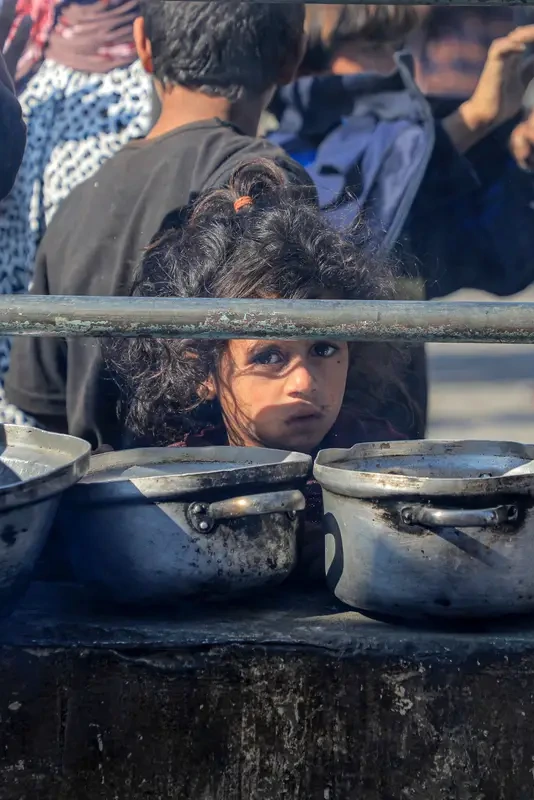
The Gaza Genocide & Legal Proceedings
Since October 7, 2023, the world has witnessed an unprecedented mobilization of civil society in response to the humanitarian crisis in Gaza.[^1] Hundreds of thousands have taken to the streets across six continents, demanding an immediate ceasefire and calling for accountability for what many international legal experts and human rights organizations characterize as potential genocide.[^2] This comprehensive report documents the global protest movement, the legal proceedings underway at the International Court of Justice and International Criminal Court, the humanitarian evidence including the contentious debate over famine classification, and the scholarly consensus emerging around genocide allegations.
Read More
