


.svg)

Why Fascism Stems From Ordinary People, Not Monsters
e too often think of people brainwashed by propaganda and fear and tyranny and the desire to conform with their neighbors. But that's not what happened. This was a bottom-up, real, thoughtful, self-justifying movement with true, powerful, convincing, fundamental roots. That's what you have to think through to understand the core of fascism.
What we're interested in is the fascist core — the fascist heart, spirit or soul. Maybe in a way, I like to think of myself like a cooking channel. I want to show you the ingredients. These ingredients might go by other names in history. Factors, conditions, drivers, historical forces, or simple causes. But I quite like ingredients because, like a cooking channel, I've tried to show you the core basics and it's up to you how you interpret them, the weights you give them, the things you think I've missed. It's up to you to put it all together with everything else you know in your head.
But the ingredients at the heart of fascism, the fascist minimum as it's been called — fascism has been endlessly debated by historians. Let's quickly go through our ingredients.
The spiritualizing or heightening of violence. Anti-rationalism, a reaction to the Enlightenment. Heroism and action over religious debate or thought. Myth and story over rationalism and materialism. Vulgar or Social Darwinism, the scientism of struggle. Ultra-nationalism and Völkisch thought as a crisis of capitalism and liberalism. Authority and order over freedom and chaos. Anti-Bolshevism or anti-universalism. Paramilitarism. The reality and shock of World War One. And establishment support from big money and big politicians.
This becomes quite a list, and it risks fascism becoming that thing that you can't define, but you know when you see it.
Why Fascism Stems From Ordinary People, Not Monsters (77 pages)
You might Also Like

Niccolò Machiavelli: He Who Wrote the Ultimate Guide for Dictators
A guidebook to rulers on how to gain and consolidate power, The Prince was considered so dangerous it was banned by the Catholic Church for more than 200 years. It has not only paved the way for tyrants, despots and dictators but has had a profound impact on business, politics, religion and the halls of power on every continent of the globe. But what did Machiavelli say? Who did he influence and how has what a man wrote 500 years ago, shaped the modern world in which we live today? From the White House to the Kremlin from the Vatican to the Federal Reserve, this is how a man from Florence changed the course of history. This is how the writings of Niccolò di Bernardo dei Machiavelli are used to manipulate and control everyone.
Read More
How Pirates, Babylonian Kings, and Coffee Shops Made Your Insurance a Reality - The Unlikely History of Risk Management
In the 21st century, products like "Occupational disability" (disability insurance) for students are crucial. This insurance provides financial stability if students become unable to work due to disability, especially given the cognitive demands of modern professions and the burden of student loans. The fundamental principle of insurance—transferring and managing risk—remains unchanged from its historical origins to its modern applications. It continues to provide a safety net that enhances economic stability and personal security, adapting to meet the evolving needs of society.
Read More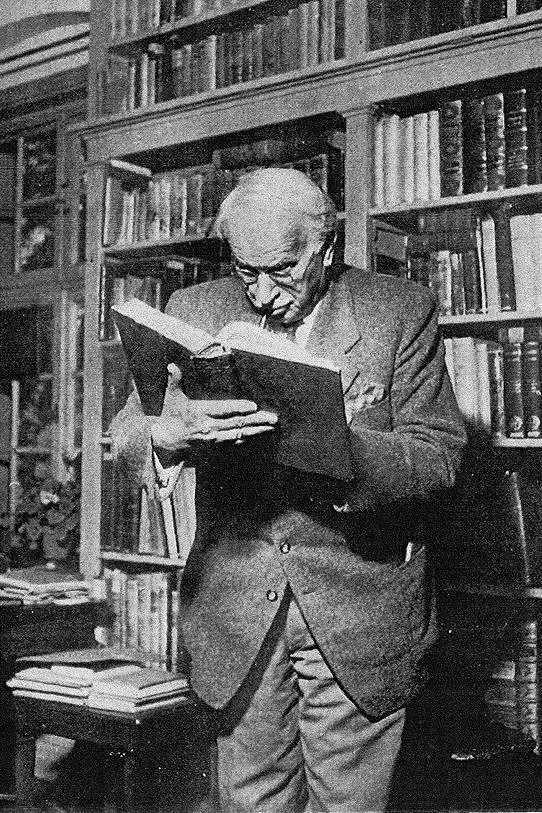
An Endless Struggle Between You and Yourself – The One War You Will Fail To Win (Carl Jung)
One of Jung's core principles was individuation. This is a hugely complicated idea, but in short, individuation is the process of a person synthesizing the many aspects of the mind into a complete, balanced, and honest human being. We should also understand what individuation is not. It is not rejecting all outside forces but knowing what to do with them. It is not acting on all of one's impulses, but understanding why they occur. The individuation process should not be confused with rather shallow concepts of self-help often seen in advertisments. Through individuation, as author Bud Harris notes, the person does not seek to merely have more positive thoughts or write some self-prescribed wrong and move on with life. Individuation is truly meaningfully being yourself. It is both a transformation and an unending process. We are forever caterpillars, forever cocooned and forever butterflies all at once. In our early childhood, we begin to make decisions and form values. We arrive knowingly or otherwise at conclusions about who we should be, how we should go through life, and what we should strive for. This often involves embracing certain qualities and trying to destroy others. There's not much we can do about this. Formative years are formative years. But when we get deeper into our lives, it becomes clear that this process having taken place so early is a problem. We reached conclusions about ourselves and our life before ourselves have lived. Imagine a person tells you to get ready for a hike in a faraway land.
Read More
