


.svg)

The New Prospect of Idealogy in 21th Century
he modern world, compared to all other epochs in history, is laughably rich, yet people are deeply unhappy, lacking human contact and friends. Many feel isolated and alone, while others are cynical about their lives and feel that they are meaningless or simply fear death. In my opinion, this is largely because there is no coherent ideology or religion that makes life worth living or motivates through its goals and requirements, providing a community or shared purpose. To combat this, people try to find meaning in things like politics or pop culture, which often lead to frightening and depressing results. However, in my view, this is only an ad-hoc solution to a long-term and damaging problem in our society. Humans are naturally believing creatures, and it is ingrained in our genetics that we are either deeply religious or ideological. Each era or age in history was characterized by either deep religious or ideological beliefs. This article will focus on the major civilizations of the world today and attempt to explain their current ideological or religious conflicts. Then, it will try to predict the direction in which these societies will evolve and what that means for the future.
In the context of history, religion resulted from an abstract concept of intersubjectivity that kept us on the right path and motivated us through its goals and requirements. One of its favorite lessons was about the chain of behavior and how we often construct subconscious mental pathways that can lead us to destructive behavior without any specific religion or dogma. For example, if we forget to go to the gym because we prefer to watch TV, the enormous power of habit is evident in these particular examples. For my personal life, it always meant trying to make my habits positive. These mental chains begin with emotional triggers that we can manipulate to our advantage, and then lead to our internal justifications to improve them for better well-being and start our journey towards a healthier life. It should also be noted that the definition of religion, according to Dirk Johannsen, includes four main variables. One of these is ritual, the second is community, the third is ethics – that is, the question of what is right and wrong in life – and the fourth is metaphysics, that is, the question of where my place in the world is. Not all religions have to have a god, but religions must encompass these four things in a rough sense.
For further examination, we should take a look at East Asia, as it portrays a society where the boundary between religion and irreligion is already weak, given that Buddhism and Confucianism are, in a way, atheistic religions. Similarly, communism, Shintoism, and Taoism are basically collections of preexisting folk customs. The thorough dismantling by Western powers that weakened the millennia-old sense of cultural superiority, along with the influence of communism, has killed religion in East Asia. This is also where the vast majority of atheists in the world reside, although the numbers could be distorted by many Europeans. However, the actual atheists are still religious to some extent for cultural reasons. To explain this, we must model the religion-esque aspects in pop cultural fan communities and demonstrate that they manifest parts of the communal and ritual aspects of religion without the belief structure. However, East Asia`s highly collectivist nature has likely slowed the emergence of new ideologies at the grassroots level, as is the case in the West. In the West, morality is based on guilt controlled by personal guilt before God, while in Confucian society, it is based on adhering to social expectations of the group and is pivotal in shaping it.
This has resulted in East Asia having survived the process of de-religionization with other core values than the West. For example, the Western social justice movement has had a hard time gaining a foothold in East Asia, except for one-third Christian South Korea, as ancestor worship and national group identity are seen as central in these regions of the world, while disrespecting ancestors and disregarding authority is abhorrent. All of this results in the modern Western left appearing crazy in East Asia, which will remain so for the foreseeable future and, in fact, will only become more entrenched in consciousness, given recent events. Apart from the different development compared to the West, the ideological vacuum has been filled in recent decades by massive economic growth and progress. All of East Asia, with obvious exceptions like North Korea, has experienced tremendous economic growth since 1960. Except for Japan, which already modernized during the Meiji Restoration, all East Asian countries have transitioned from agrarian societies to the industrial age within a single generation.
In most of these societies, the lack of significance is mitigated and balanced by massive economic gains because when the cake grows, no one asks difficult questions. This means that third world nations have effectively stalled since 1990 because they have fewer young people who are innovative and more old seniors who absorb economic growth through immense social spending (with the exception of China). Additionally, Japan and many Asian countries such as China have printed a lot of money and pretended that their system is richer than it really is to grow, but this cannot last forever as basically every Confucian nation has arrived at their end for this reason, historically speaking. Examples of this decline can be traced through several historical reviews, but this is not the subject of the article and has been omitted for this reason. When considering the future of these nations, it can be said that South Korea and Japan will be confronted with an immense crisis in the coming decades, which is already knocking on their doors and showing indicators of the impending social discord. For China, a nation with over one billion people, this process would be one of the most significant events in history. This period of discord and chaos will demand significance as people can no longer rely on material success to justify their lives. Confucian civilizations generally have three opposing cultural forces that have been shown throughout their history. The first is the utilitarian force represented by the philosophy of Legalism, which essentially assumes that the goal of existence is to support the state, which was a massive failure until it was supported by the communitarian ethical force of Confucianism. Confucianism assumes that we can maintain society in a good way by leading a highly ethical personal life. The third force is the mystical force such as Taoism and Buddhism, which involves a retreat into the mind and the hidden spiritual parts of the world to find meaning. This is a topic I could talk about for days, but in general, we will see people ordaining along these various ideological routes to shape future ideologies.
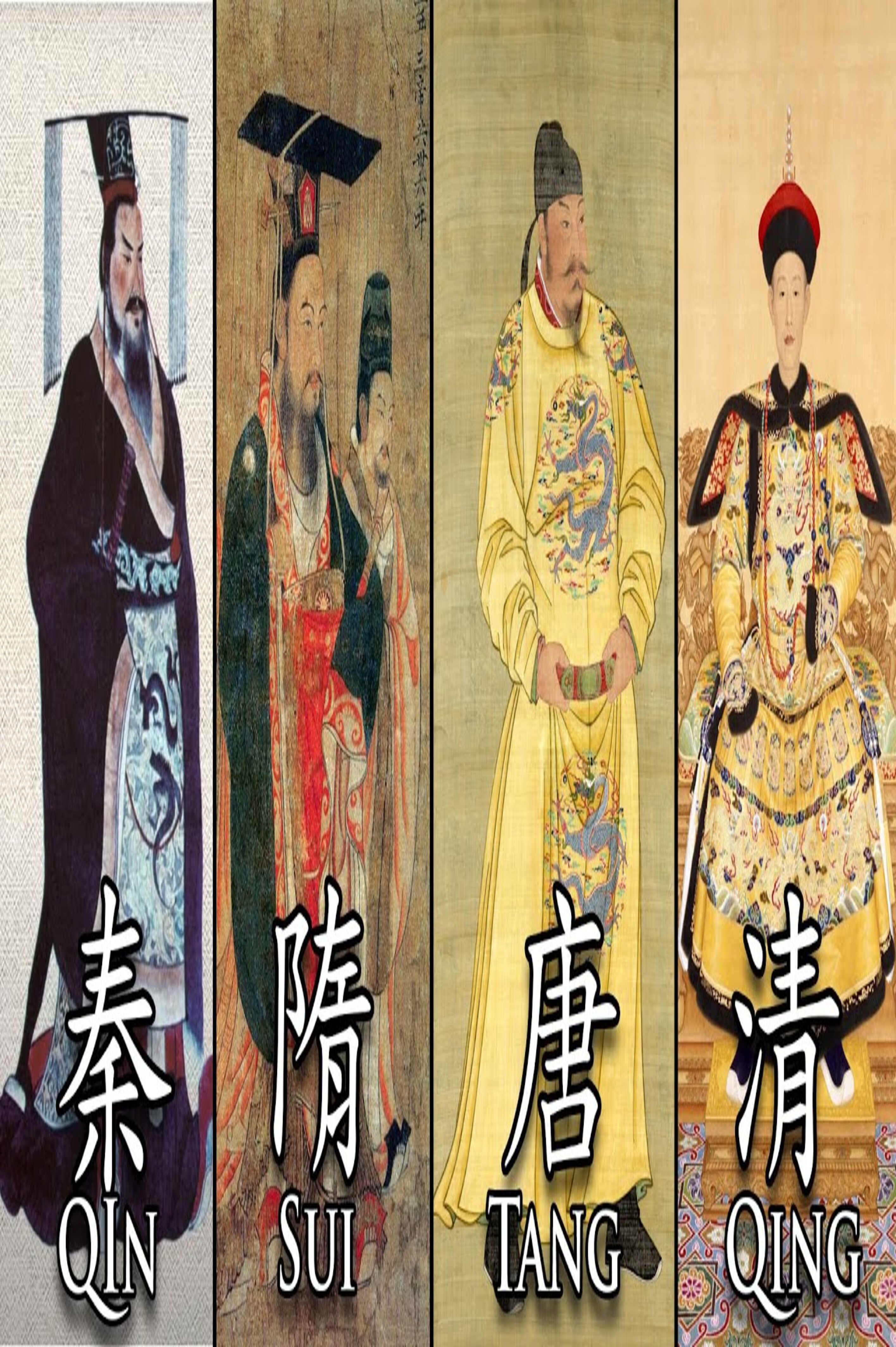
Currently, China is attempting to underpin a combination of legalistic obedience to the state and Confucianism. Interestingly, Legalism as an ideology has been despised throughout Chinese history, although the Chinese government still had an effectively legalistic (not legislative) basis, but the Chinese Communist Party has been trying to revive Legalism in recent years and has been running pro-legalist propaganda. Legalist propaganda under a different name is actually the ideology that the Chinese government wants to promote. Legalism advocates that obedience to the state is the highest good for the individual, which sounds like a goldmine for an authoritarian state like China, but it also violates Legalism because the state constantly fails to have the population it governs happy and communitarian with it, and de facto achieves the inverse due to the deep-rooted corruption of the CCP (Eng.)/KPCh (Communist Party of China), therefore creating an unwillingness among its people, making it difficult to generate populist motivation. In contrast to the rule that it is better to be loved than feared because those who love you will fight to the death for you while those who fear you will stab you in the back when you are weak. Legalism, on the other hand, at least under Chi Xi Huang, collapsed terribly when the Stalin-like dictator died in 200 BC and was no longer able to hold the empire together with his sheer force of personality. The legalistic philosophy of imperial Japan during World War II led to complete madness, declaring war on four countries with more than double its population at once and was destroyed in the ensuing crisis. If the CCP survives long enough, it will try to promote a totalitarian ideology like that of the 20th century, in which the state has total power over the population.
China is currently trying to close its borders and promote Han culture (the most prevalent demographic in China, which makes up 90% of the population), as events with the Uyghurs from the Xiangling region have shown. The logic behind this is that China is threatened on all sides and that only extreme loyalty to the government can ensure the survival of society. We can see that this ideology leads to deeply immoral results without any connection to morality. For example, we could look at the establishment of baby factories and orphanages that tried to boost the birth rate or the Orwellian-style surveillance, where modern technology combined with totalitarianism is an absolutely horrifying combination. The Communist Party has attempted to promote Confucianism in schools and education, but this was a heavily sanitized version of Confucianism that served only to underpin Chinese nationalism in the state. The problem with Confucianism from the perspective of the Chinese government is that it places central importance on the local family unit, emphasizing the importance of ethics and honor, and advocating for the overthrow of unethical and dishonorable rulers through revolution. Confucianism places honor and duty above all else, which is alarming for an amoral state like communist China that seeks to exert total control over society. CCP is currently trying to promote a combination of legalistic obedience to the state and Confucianism. Interestingly, Legalism as an ideology has been despised throughout Chinese history, although the Chinese government still had an effectively legalistic (non-legislative) basis. However, in recent years, the Chinese Communist Party has promoted pro-legalist propaganda. Legalism holds that obedience to the state is the highest good for the individual, which sounds like a goldmine for an authoritarian state like China. However, this goes against the fact that the state has constantly failed to make the population it governs happy and to vouch for it in most societies throughout history, and has de facto achieved the opposite. Unlike Machiavelli, who said that it is better to be loved than feared, as those who love you will fight for you until death, while those who fear you will stab you in the back when you are weak, Legalism states that obedience to the state is the highest good. At least under Chi Xi Huang, the legalistic philosophy collapsed horribly when the Stalin-like dictator died in 200 BC and was no longer able to hold the empire together with sheer force of personality. The legalistic philosophy of Imperial Japan during World War II is that it will be difficult for the Chinese government to find an ideological basis that maintains their control over society while adhering to the moral and ethical standards that are essential for successful coexistence in a society.
Other Confucian nations in China`s vicinity have always existed in China`s orbit, and so they have the remarkable ability to make rapid cultural conversions to keep up with the Western world. This has continued with rapid conversions towards capitalism, communism, and Western influence in Korea, Vietnam, and Japan. If their crises continue, we will experience a profound family-based Confucian backlash as their societies break down due to declining birth rates. This is especially acute now, as China is experiencing a population decline rate for the first time since 1970. The people will blame their parents for orienting themselves too much towards Western materialistic values, and they will swing hard in the other direction and demand a family-oriented society. The shame-based societies will quickly transition to strong nationalism and family-oriented values by making a massive co-decision. One of the interesting things about Eastern religions is that, with the exception of Taoism and Shintoism (which originates from Japan), they have not been disproven by modern science. Buddhism is essentially just a philosophy of the mind, and Confucianism is a theory of social behavior between the human intersections of society. Unlike the Abrahamic religions, there is nothing that science can really disprove. However, what is even more interesting is that since World War II, Buddhism has not seen a revival in East Asia, although it has taken root in the West. It would not surprise me if Buddhism were to play its cards right and experience massive growth here. Of all the regions in the world, East Asia is the most fertile ground for a completely new religion, after Chinese Legalism has dissolved. There is so much open field here, and none of the ideologies here have really connected people in a meaningful way with a higher purpose.
In summary, it can now be said that Confucianism is based on ethical principles and social behavior. Therefore, we may see a renaissance of these traditional Eastern religions and philosophies in the future, providing people with guidance and direction without conflicting with scientific reality. The Western world is highly secularized, with many people turning away from traditional religions and instead focusing on science, technology, and individual freedom. However, this trend has also led to a crisis of identity and the search for meaning. People are increasingly dissatisfied and isolated, and they are seeking new ideologies or communities to fulfill their needs. In this context, we may see a return to spiritual and humanistic values that emphasize the individual and their relationships with others without relying on a specific religious doctrine. Such a movement could promote a new social structure based on empathy, collaboration, and mutual support. Overall, it is difficult to predict exactly which ideologies and religions will dominate in the future. However, it is likely that people will continue to seek meaning and community, and they may rely on traditional or new philosophies and belief systems to fulfill their needs.
Appendix & Sources
For readers interested in delving deeper into the themes discussed in this blog post, the following books provide comprehensive explorations of modern ideologies, discontent, and the search for meaning in the 21st century and was being used as a Source for this Blog:
- "The Age of Secularization" by Augusto Del Noce
- Short Description: Del Noce examines the philosophical and sociopolitical shifts leading to the secularization of Western societies, addressing the struggles in finding meaning and the sense of alienation that accompany the decline of religious frameworks.
- Source: Del Noce, Augusto. The Age of Secularization. McGill-Queen's University Press, 2017.
- "The Meaning of Belief: Religion from an Atheist's Point of View" by Tim Crane
- Short Description: Crane offers a unique atheist perspective on religion, arguing for its essential role in providing meaning, community, and moral guidance. He explores the significance of religion in addressing existential crises and bridging the gap between religious and secular worldviews.
- Source: Crane, Tim. The Meaning of Belief: Religion from an Atheist's Point of View. Harvard University Press, 2017.
- "Homo Deus: A Brief History of Tomorrow" by Yuval Noah Harari
- Short Description: Harari explores the future of humanity, discussing potential developments in technology, biology, and society. He addresses the challenges of finding meaning in a world where material needs are met but existential questions remain, examining how emerging ideologies and religions might evolve.
- Source: Harari, Yuval Noah. Homo Deus: A Brief History of Tomorrow. Harper, 2017.
- "Liquid Modernity" by Zygmunt Bauman
- Short Description: Bauman describes contemporary society as "liquid" and transient, characterized by constant change and uncertainty. He examines the impact of fluidity on individuals' struggles to find stable sources of meaning and identity, highlighting challenges in forming lasting relationships and communities.
- Source: Bauman, Zygmunt. Liquid Modernity. Polity Press, 2000.
You might Also Like
Understanding China of Pre-Modern Era
In short, if the last foreign invasion killed a couple million people, it`ll encourage China to try to compete with the rest of the world, and if it`s killed tens of millions, it`ll push China into PTSD shock that`ll force it into an isolationist period. I want to make clear that China was the wealthiest, most technologically advanced nation on Earth for most of its history. However, the Neo-Confucian Renaissance and the bureaucratization of Chinese society eventually led to its stagnation and decline. The bureaucrats, in their quest for control and stability, suppressed technological advancements and limited trade, which ultimately hindered China`s ability to compete with the rapidly advancing West.
Read More
The Big Machine: Dataism and the Death of the Self
...data counts numbers. It does not recount. It does not reflect. It does not re-examine events at different times in life with earned perspective of living in the real world. When we make these judgments and decisions based upon these numbers, it is no wonder they fail to provide peace or happiness. But still, we pursue further such decisions under the guise of self-improvement. When in truth, we are just closing the door of a prison built with our own hands, we become both the guard and the inmate.
Read More
When Artificial Intelligence Begets the Organic - The Rise of Post-Human Intelligence
Bias is part of being human. We have positions, perspectives, cultures, lenses through which we see things. AI models are trained through reinforcement learning — gently nudging the AI in particular directions. But there is often no single correct answer to an ethical question. David Hume famously argued that you cannot derive an ought from an is — you cannot determine what the world should look like from what it currently is. The data is biased by history. And it is being further shaped, nudged, and corrected by a very specific group of people in a very specific part of the world at a very specific moment in history.
Read More
